By Dr. Amir Afzul, Senior Research Physician
Why Should I Take Part in Research?
As a doctor, people ask me lots of questions, but now I have one for you; have you ever wondered how we get the latest in medical advancements? The answer isn’t just scientists in laboratories with white coats. Every treatment available today that you or a loved one has relied on, from antibiotics, to vaccines, to cancer therapy reached patients because people just like you chose to take part in research. Clinical trials are not about being experimented on; they’re about working together to shape safer, more effective healthcare for yourself and future generations. So, in a time when the NHS is under tremendous pressure and we need vital, affordable treatment now more than ever, it is volunteers who make discoveries possible.
Research. It’s Good for you.
What I find that many fail to realise is that research isn’t just about helping future generations but often benefits volunteers directly. For every trial at Panthera we undertake careful health checks and monitoring. For many, this feels like a well-overdue, comprehensive health MOT. It’s often the case that in the study screening process we routinely detect health concerns long before they become problems. This might mean finding an issue early, advising you best on how to manage it, or sending a letter to your GP so that appropriate steps are taken. A letter from one doctor to another almost always sets things in motion quickly. Patients often tell us they learn something new about their health and how to manage it better; knowledge that benefits them well beyond the study.
The Value to Society
Medical research gives you the chance to contribute to something bigger too. Every participant helps create the evidence that ensures medicines tomorrow are both safe and effective. At Panthera, we are often running trials with treatments which could be five to fifteen years ahead of what’s standard in NHS practice! That means volunteers may have access to medicines for conditions where there is currently no licensed treatment available. Volunteers are therefore not just contributing to medical progress but shaping tomorrow’s healthcare. Many join out of altruism; wanting to do a ‘good deed’ and give something back to their community or to help tackle conditions affecting their families.
Importantly, Panthera’s approach is not an exercise about filling numbers. Participation only goes ahead if a trial is safe for you, if it has a realistic potential to benefit you, and if you meet the strict inclusion and exclusion criteria set out by the study. Those criteria are not arbitrary either, they are reviewed in detail and must go through rigorous ethical approval before a study can even begin.
Common Concerns
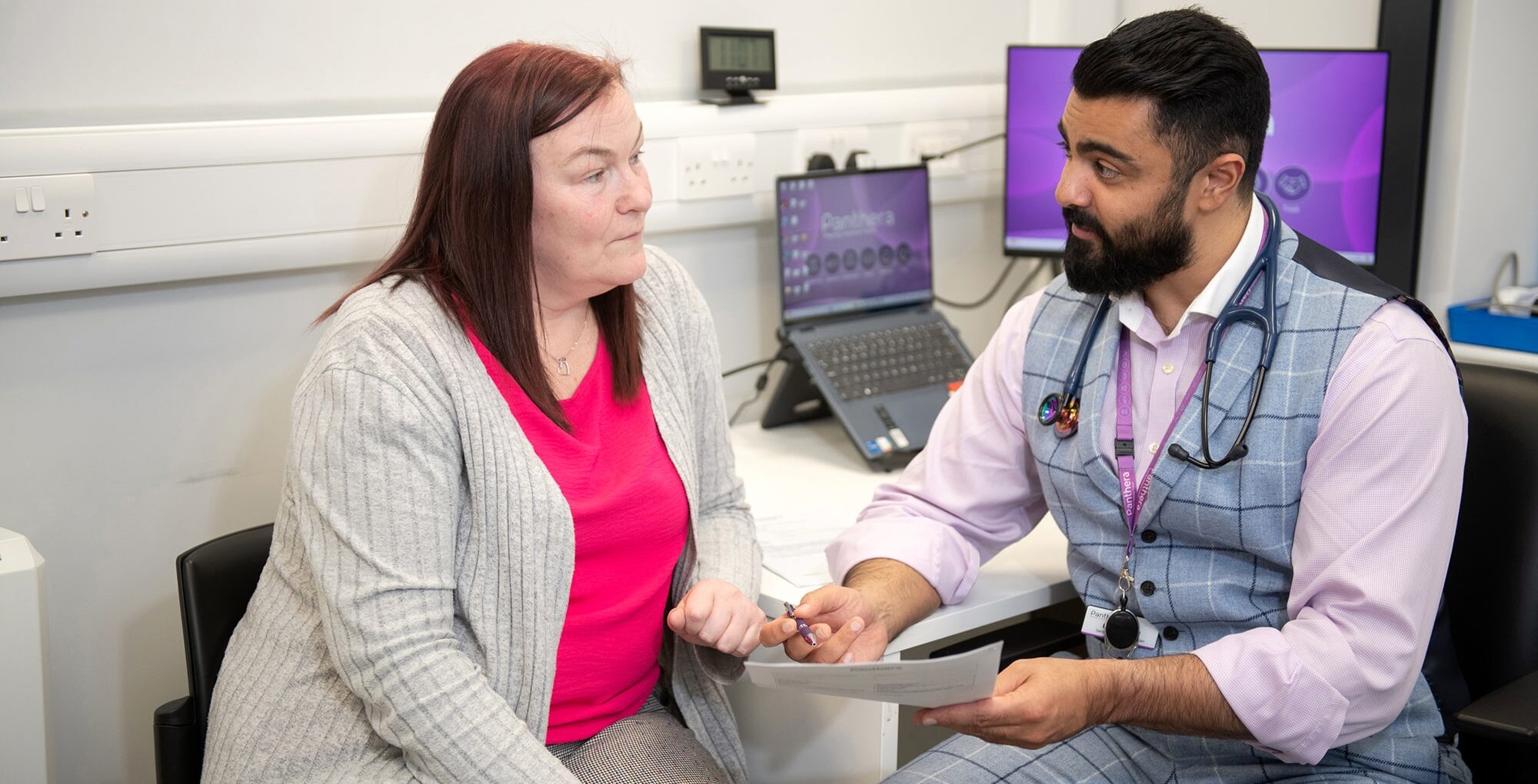
So, if the (often paid) comprehensive health screening, regular health feedback, early detection of health issues, and access to the pinnacle of innovation isn’t enough to convince you, what else could? I often hear in my clinic that volunteers most enjoy the active follow-up and monitoring. With how trials operate any change in your health during a study creates a report with a full history, and we keep following you up until you tell us it’s resolved. In this process you will be offered the opportunity to speak to our clinicians about your health concerns and as partners in your care, when we find results that need acting on, we advocate directly with your GP or consultant. Of course, you always remain in control; participation is voluntary, and you can withdraw at any time.
It’s natural to have questions about safety and rightly so. At Panthera, we do not run first-in-human studies. That means by the time you’re offered a trial, there is already significant safety data available, something you can always ask your study doctor about before enrolling. Moreover, the safety oversight is constant; every piece of research is reviewed by ethics committees and regulatory authorities. We even audit ourselves regularly to ensure the highest standards.
My job as a senior research physician is very clear: to make sure patients are safe in our trials, and to ensure we produce high-quality data that gives doctors and patients tomorrow’s medicines with confidence. In our duty to protect you, when you join a trial, you’ll always have access to speak with a study doctor (24 hours a day in an emergency) or nurse.
Impact
The impact is often more personal than people expect. One volunteer once told me that after joining a study for migraine treatment, having lived with years of failed therapies, that their headaches disappeared. The trial changed their life. Others gain less dramatic but equally valuable benefits. By volunteering for research, you become more than a participant; you become a partner in discovery. You are helping to shape breakthroughs that could transform care for yourself and others.
Every breakthrough starts with someone like you who said “yes” to research. As research physicians, our role is to protect your safety, stand alongside you during the study, and generate the knowledge needed to make safe, effective medicines a reality. The future of healthcare depends on us working together and that journey begins with a single decision to take part. If you’d like to explore opportunities, more information is available through the NHS, national research registries, or directly through us at Panthera Bio. And as ever, it’s always your choice.
————————-
Dr Amir Afzul MBA FRSPH MCMI CMgr MBChB
Amir has been with Panthera for over three years and is one of our senior research physicians. He has an interest in longevity medicine and has several years of distinguished NHS service from which he brings his experience across myriad specialties. He has been the principal investigator for over ten studies spearheading safety, operations and trial oversight. Amir is passionate about research and furthering medical science.